Maintenance & safety
Work instructions for preventive maintenance, with a worked example
· Updated · 4 min read
A large part of keeping a company running efficiently and profitably is ensuring that all equipment is functioning optimally. Routine preventive maintenance needs to be conducted. Unfortunately, regular equipment checks often get overlooked, mainly because attention is usually directed toward more pressing issues. However, when small tasks are overlooked for long periods of time, problems follow: production errors, work injuries and asset damage. A breakdown in critical equipment is costly both in repairs and in downtime and delays.
What is preventive maintenance?
Preventive maintenance (or preventative maintenance) is maintenance that is regularly performed on a piece of equipment to lessen the likelihood of it failing. It is performed while the equipment is still working so that it does not break down unexpectedly. In terms of the complexity of this maintenance strategy, it falls between reactive (or run-to-failure) maintenance and predictive maintenance. It is also one of the foundations of total productive maintenance (TPM).
Preparing work instructions for preventive maintenance
Detailed maintenance work instructions are meant to drive out the natural “human variation” in the way people do things. They provide a basis for training and qualifying a person to perform the required tasks on specific equipment. The use of the work instructions must be enforced—they’re not optional. Instructions that are developed can be a starting point for continuous improvement of equipment performance and reliability, improved workplace safety and environmental conditions, and for improving the overall productivity of the company’s physical assets and its human resources.
Initially, your efforts should focus more on improving equipment performance and reliability than overhauling your preventive maintenance work instruction documents. Be careful not to get mired down in a massive rewrite of all of your facility’s preventive maintenance work instructions—the financial justification might not be there. Concentrate on the delivery of measurable business results every step of the way.
Instructions only help if they are at the machine when the work is done. Attach them to the preventive maintenance work order, or put a QR code on the machine that opens the current version on a tablet or phone. For simple, low-risk tasks a checklist is enough. For complex or safety-critical tasks, pair the checklist with step-by-step photos or a short video.
Begin improving your maintenance work instructions by targeting your most penalising equipment items or processes. Look beyond the maintenance needs of the equipment and consider the plant or facility operations. Select your starting points with equipment that’s a candidate for improved performance.
Example: a weekly check on a hydraulic press
When and who: weekly, at the start of the first shift, by a trained operator. Anything outside the limits goes to maintenance.
Steps and what “good” looks like:
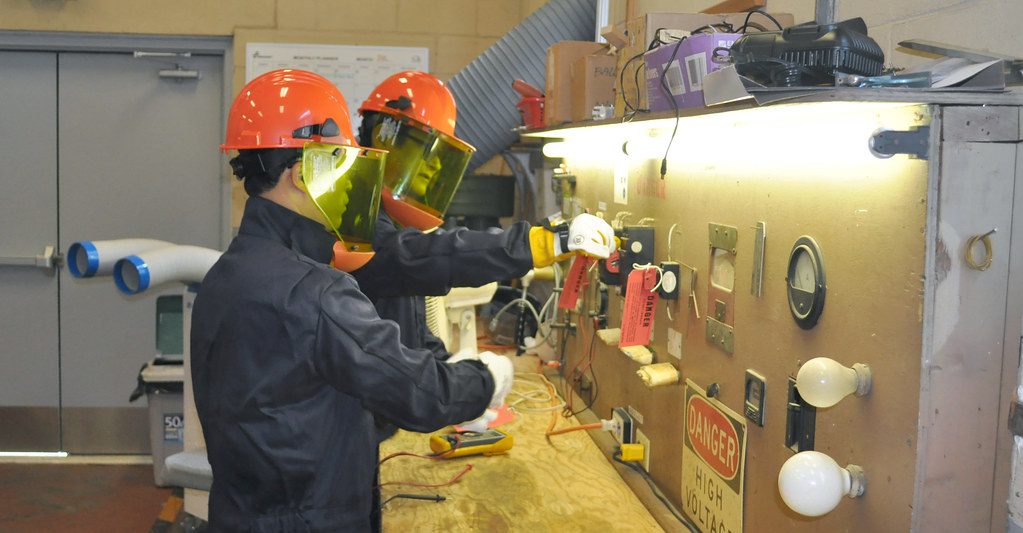
- Stop the press. If any check needs guards open or hands in the working area, apply lockout/tagout first.
- Check the hydraulic oil level in the sight glass. Good: between the min and max marks; oil clear, not milky or dark.
- Check the filter clogging indicator. Good: in the green zone.
- Inspect hoses and fittings for leaks, chafing and bulges. Good: dry fittings, no oil under the machine.
- Start the press and read the system pressure and oil temperature gauges. Good: within the ranges on the machine label or in the manufacturer’s manual.
- Test the safety devices one by one: light curtain, two-hand control, emergency stop. Good: the press stops, or will not cycle, on every test.
- Clean the ram guides and lubricate the points on the lubrication chart with the specified lubricant.
- Run a test cycle and listen. Good: no knocking, squealing or new noise.
What to record: oil level OK/NOK, filter indicator OK/NOK, pressure and temperature readings, leaks yes/no (with a photo if yes), pass/fail for each safety device, comments.
Sign-off: the operator signs the check. Any NOK item raises a maintenance request. If a safety device fails, the press stays locked out until maintenance has repaired it and signed it off.
Take the limits from the press manufacturer’s manual. The point of the instruction is that every operator checks the same things, against the same limits, and records the same values.
Where REWO fits
In REWO, a check like this is a Form: each item is a yes/no or a value, with a photo of what good looks like, and results are recorded with who did the check and when. Results can be sent by email or SMS link. Longer tasks, such as changing the hydraulic filter, work better as a video guide opened from a QR code on the machine. See REWO Forms.
Read next: What is Total Productive Maintenance (TPM)? · What is a lockout/tagout procedure? · REWO Forms