Lean & standard work
One-Point Lessons (OPLs) in Manufacturing: The Power of Simplicity
· Updated · 4 min read
In manufacturing, clarity matters. Whether you're training a new operator, improving a maintenance procedure or rolling out a safety standard, clear communication can be the difference between doing it right and a costly mistake. That's where One-Point Lessons (OPLs) – also known as Single Point Lessons – come in.
What is a One-Point Lesson?
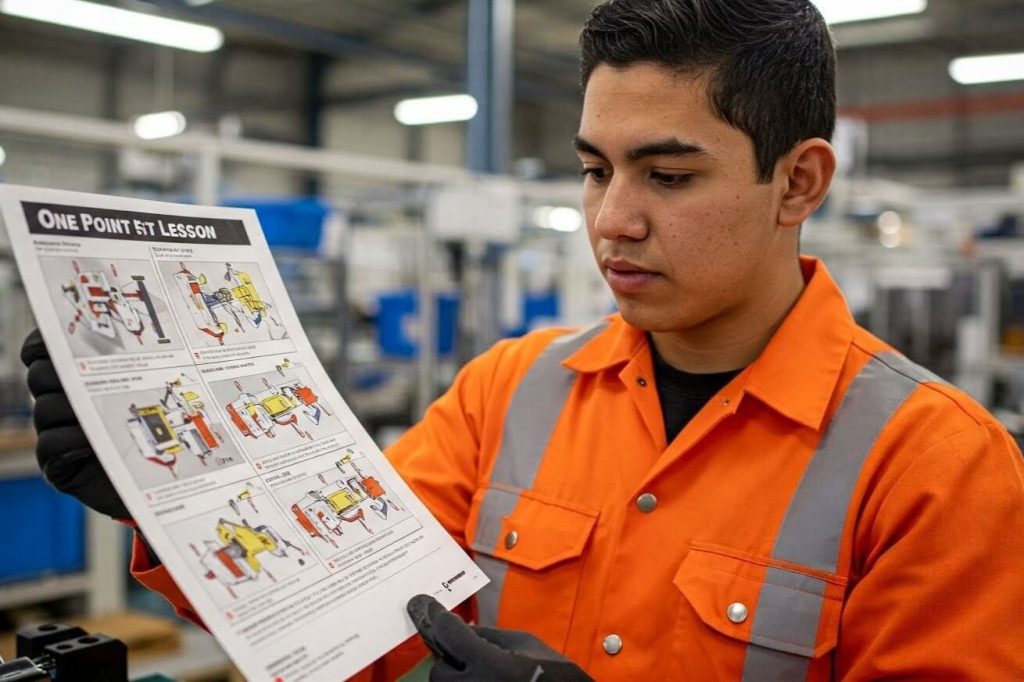
A One-Point Lesson is a simple, visual training tool used in manufacturing to communicate a single, specific piece of knowledge. True to its name, each OPL is focused on one point only – how to safely operate a machine, what to watch out for during a cleaning procedure, or how to spot wear on a specific component.
These lessons are:
- Short and focused (often one A4 page)
- Highly visual (photos, diagrams and symbols are common)
- Easy to understand (written in plain language)
- Shared on the shop floor (often printed or displayed at workstations)
They originated in Total Productive Maintenance (TPM) and have since become common practice in lean manufacturing, Kaizen and continuous improvement work.
Why One-Point Lessons work
OPLs work because they reduce cognitive overload and standardise critical knowledge in a digestible format. Rather than overwhelming workers with a dense SOP or a long manual, an OPL delivers what's essential – and only that. This leads to:
- Faster onboarding for new employees
- Fewer mistakes in routine tasks
- Better safety and quality outcomes
- Better-informed workers who can act on their own
Where knowledge is lost through turnover or stays in a few experienced heads, OPLs give you a simple, repeatable way to write it down.
How REWO fits into the One-Point Lesson method
Traditionally, One-Point Lessons have been printed sheets pinned to boards or laminated and attached to machines. That still works, but paper is hard to keep current and can't show motion.
With REWO Guides, you create video-based One-Point Lessons recorded on the shop floor and share them where the work happens.
1. Visual-first documentation
REWO turns video, images and text into step-by-step instructions, recorded on site. This matches the original intent of OPLs – to communicate clearly through visuals.
2. Quick creation and updates
Creating an OPL in REWO starts with filming the task on a mobile device, adding short text to each step, and sending it for approval. Optional AI assistance can help with the draft; a person reviews it before it is published. Updates go through the same approval, so lessons stay accurate.
3. Access and version control
Operators open the current version of a lesson via QR code, on a tablet or at a workstation screen. Version history shows what changed and when, so there is no confusion about which procedure is correct.
4. Analytics
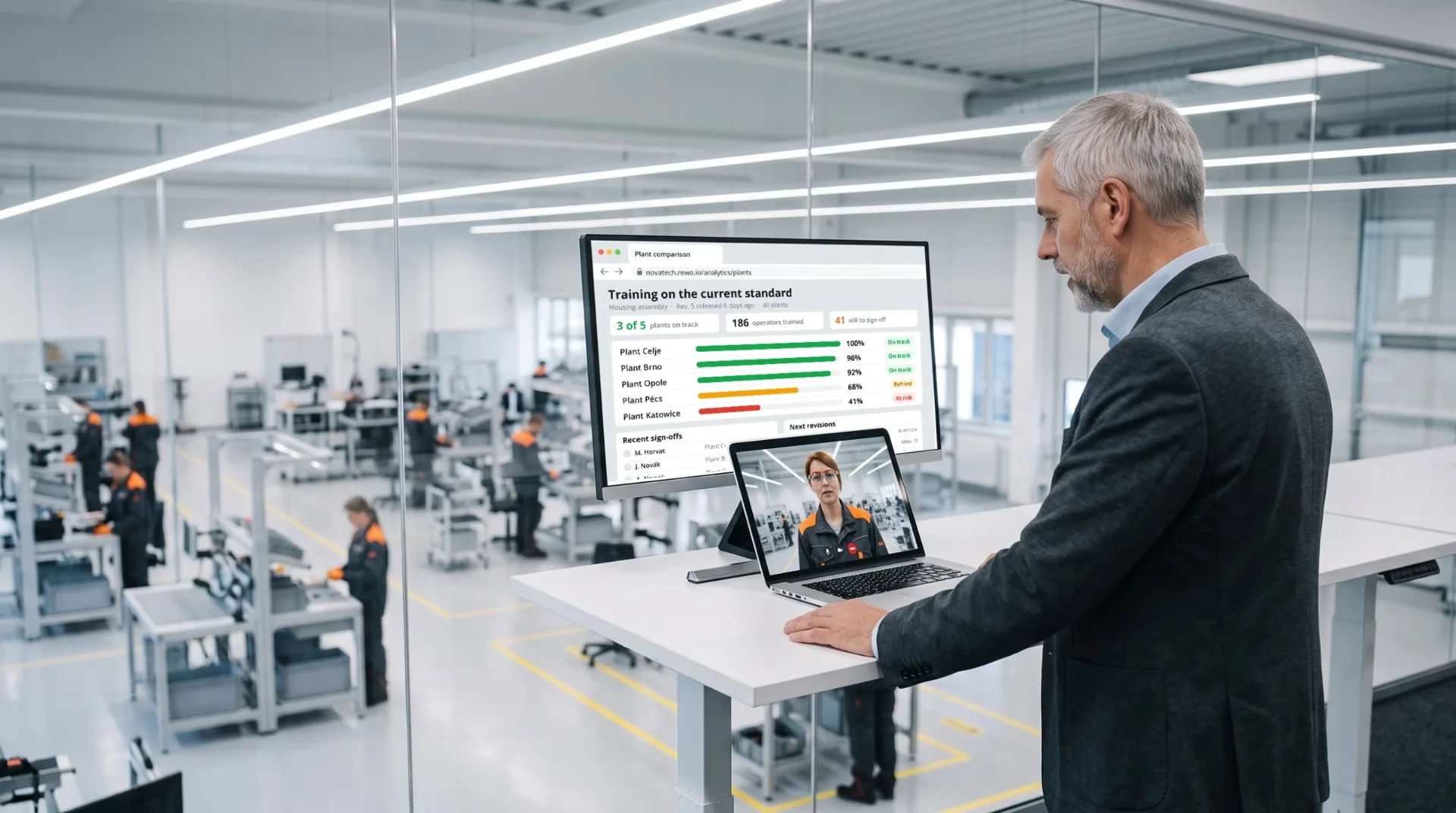
REWO Analytics shows who viewed and confirmed which version of a lesson, and when. That helps you see where knowledge has reached the line and where more support is needed.
5. Multilingual teams
Lessons can be translated into more than 100 languages, so operators can read them in the language they understand best.
Bridging digital and paper-based training
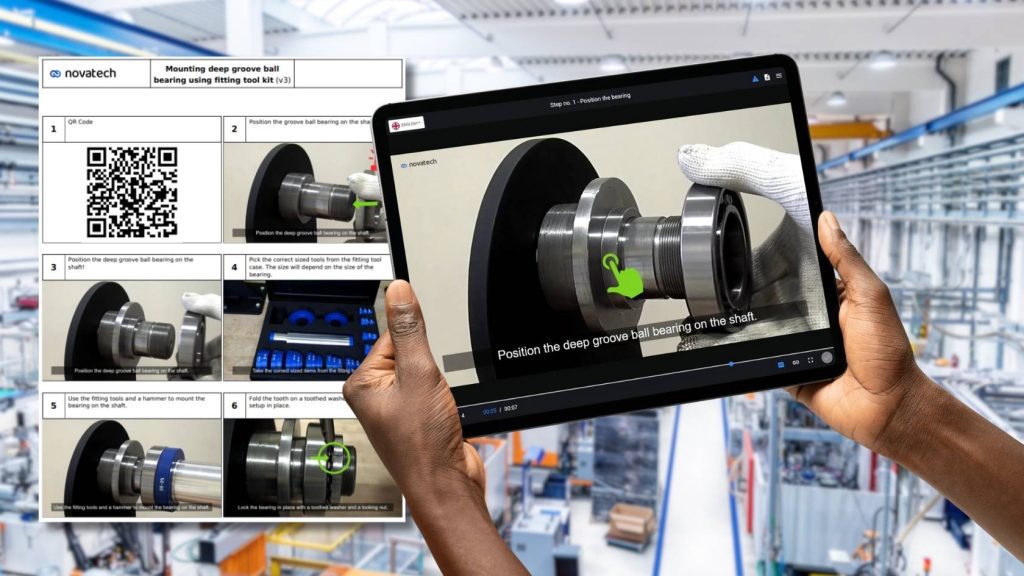
REWO is video-first, but it doesn't force you to give up paper. You can export a guide to a printable PDF with key images and short instructional text.
This means you can take a video work instruction and produce a printable One-Point Lesson in the familiar A4 layout. These printable OPLs:
- Feature key images and short instructional text
- Are easy to post at workstations or machines
- Include a QR code that links back to the full video instruction
This approach respects existing habits while adding something new. Employees who want more detail scan the QR code and watch the full video; others can still rely on the printed sheet.
In this way, REWO doesn't aim to disrupt existing routines but to build on them gradually. It gives companies a path to digital tools without leaving behind teams used to established methods.
The future of OPLs is hybrid
As operations become more complex and spread across more sites, companies need ways to keep knowledge consistent. One-Point Lessons remain a foundational method. Combining video OPLs with printed sheets that link back to them gives teams both: the depth of video and the simplicity of paper at the machine.
Want to see how REWO handles OPLs? Book a demo or explore REWO Guides.
Read next: REWO Guides · REWO Analytics · What is Total Productive Maintenance (TPM)?