Quality & compliance
The true cost of downtime from human error in manufacturing
· Updated · 5 min read
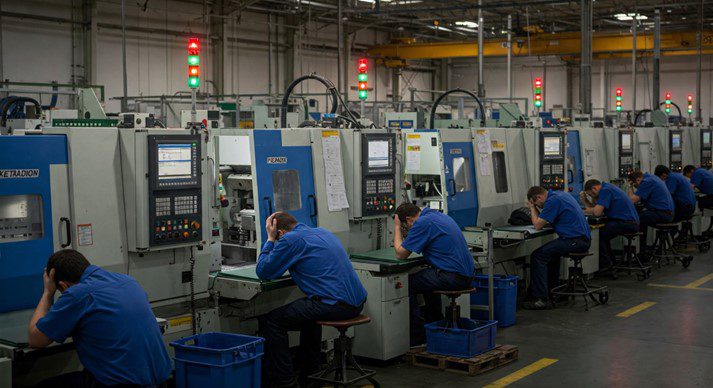
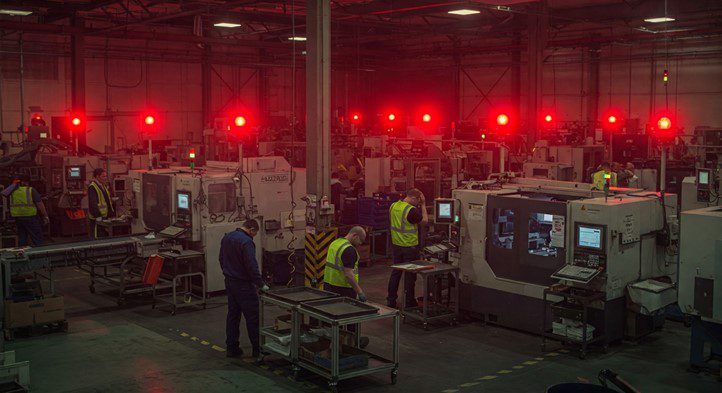
When a line stops, the first question is usually about the machine. Was it a bearing, a sensor, a software fault? Often the answer is less technical. The wrong setting was entered after a changeover. A step was skipped. Someone covering an absence did the job the way they remembered it from last year.
Human error is a real cause of unplanned downtime. It is also, in most cases, a symptom: of an instruction that was wrong or out of date, of a person who was never trained on the current method, or of a task done so rarely that nobody remembers it properly. This article looks at what that downtime costs, where it comes from and what reduces it.
What downtime costs
Siemens' The True Cost of Downtime 2024 report estimates that the world's 500 largest companies lose around $1.4 trillion a year to unplanned downtime, about 11% of their revenues. For a large automotive plant, it puts the cost of one lost hour at $2.3 million.
The report does not say how much of that is caused by human error, and we won't quote a percentage here: the figures that circulate are rarely traceable to a source. Your own stoppage log is a better guide.
Whatever the share, the cost of a stop is more than the lost output:
- Labour. Operators are paid while the line stands, then again in overtime to catch up.
- Scrap and rework. Parts in progress when the line stops, or made with the wrong setting before anyone noticed.
- Emergency repairs. Unplanned fixes, rushed spare parts and contractor call-outs.
- Logistics. Express freight for late deliveries and premium prices for rush-ordered material.
- Customer penalties. Missed delivery commitments, and in supply chains that run just-in-time, a stoppage at your customer.
There are less visible costs too. Maintenance staff spend their time firefighting instead of on planned work and improvements. Repeated stops raise stress on the line. And customers remember who caused their shortage.
Where human-error downtime comes from
A wrong or outdated instruction
An engineering change was approved, but the printed sheet at the station still shows the old torque value or the old sequence. The operator follows the instruction correctly and still gets it wrong. This is the most avoidable kind of error, and one of the hardest to spot, because nobody did anything "wrong".
An untrained person on the station
Absence cover, new hires, agency staff, a reshuffle after a line rebalance. The person on the station is willing and capable, but has never been trained on this task, or was trained on an older version of it. Production pressure makes it tempting to put them there anyway and hope a colleague nearby helps out.
A rare task done from memory
Some jobs happen once a month or once a quarter: a changeover to a low-volume variant, a calibration, a fault that appears twice a year. Nobody does them often enough to remember every step. The fix may have been found before, by someone on a different shift, and never written down. So the next team works it out again, while the line waits. In high-mix production this is the norm rather than the exception; our article on work instructions for high-mix assembly covers it in detail.
Shift handover
The previous shift adjusted a parameter, swapped a tool or started a job without finishing it. If that doesn't reach the next shift clearly, the next shift starts from the wrong assumption.
Knowledge that is about to leave
Many plants rely on a few experienced technicians who can diagnose a fault by ear. When they retire, change jobs or are simply not on shift, the time to recover from a stop goes up. The knowledge was never in the system; it was in them.
How to reduce it

Put the current instruction at the point of use
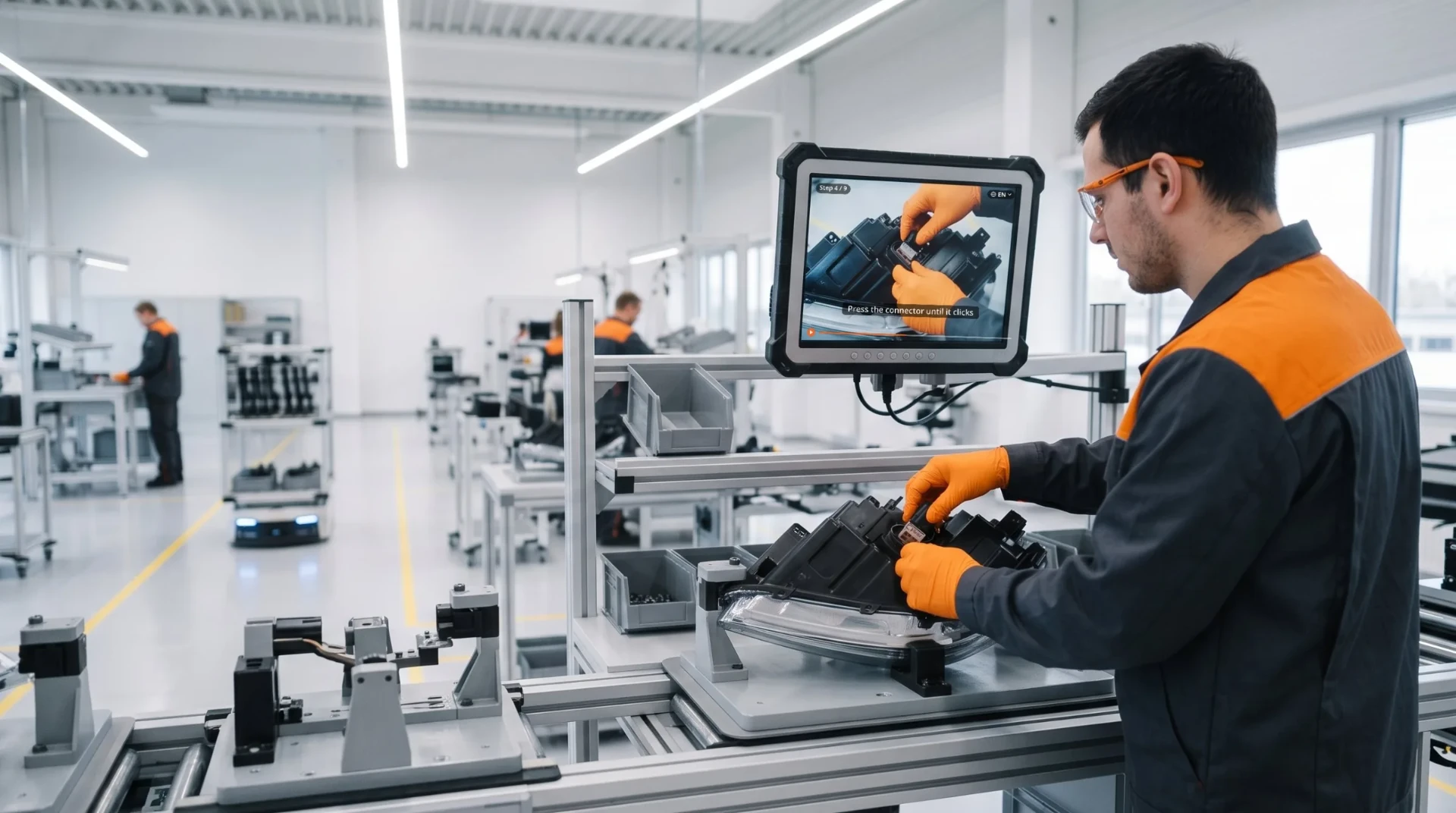
The instruction an operator sees at the station should always be the approved, current version. Remove uncontrolled printouts. Open the instruction from the station itself, by QR code or from the work order in your MES, so nobody has to search for it. When an instruction changes, the old version should disappear from the floor the same day.
Keep a record of who is trained on the current version
A skills matrix tells you who is trained on which task. Add the version: who has seen and confirmed the current revision of the instruction? Then check it before assigning someone to a station, especially for absence cover and new starters.
Write troubleshooting guides for first-line fixes
Most stops on the night shift happen when the most experienced people are at home. Ask your best technicians and setters to record how they diagnose and clear the faults that come up most often. Turn those into short visual guides that an operator or first-line maintenance person can follow safely. Be clear about where first-line fixing ends and a specialist must be called.
Check after every change
Changeovers, maintenance work and instruction updates are when errors creep in. Use a short start-up checklist or first-piece check after each one, so a wrong setting is caught on the first part, not the five-hundredth.
Learn from every stop
Log the cause of each stoppage. When the root cause is missing or wrong knowledge, update the instruction or the training, not just the machine. Over time, your stoppage log tells you which instructions need the most attention.
Where REWO fits
REWO doesn't measure downtime; your MES or OEE system does that. What REWO does is make sure the right instruction reaches the station: approved guides delivered by QR code or from inside your MES, troubleshooting guides built from video of your experienced people, and checklists for start-up and first-piece checks. REWO Analytics shows who viewed and confirmed which version, so you can see who is trained on the current method before you put them on a station. See how this works for plant managers.
Read next: Work instructions for high-mix assembly · REWO for plant managers · What are quality checklists and how to use them