Work instructions
Work instructions for high-mix assembly: keeping variants from becoming mistakes
· 5 min read

On a line that builds one product, the instruction is mostly a training tool. After a few weeks, operators know the job.
On a line that builds sixty variants, the instruction is a working tool. Nobody remembers which bracket goes on variant 23 — the one that runs twice a year — and nobody should have to. In high-mix assembly, many quality escapes come from people doing the right job for the wrong variant.
Where variant mistakes come from
Look at the last ten variant-related defects on your line and they'll usually fall into a few groups:
- Wrong instruction opened. The operator picked the closest-looking variant from a folder or a list.
- Memory instead of instruction. The common variant is built from memory, and the rare one is built the same way.
- Copies that drifted apart. Each variant has its own instruction, copied from another one years ago. A change was made to some copies and not others.
- The changeover step got skipped. The difference between variants is in the setup — a different fixture, a different torque program — and the setup isn't in the instruction the operator looks at.
- The low-volume runner. A product that runs twice a year comes back, and the people who built it last time are on another shift or have left.
Structure: describe the base, then the differences
Most variants of a product family share most of their steps. Write instructions so the shared part stays shared:
- One base instruction per product family, owned by one person, with the steps every variant has in common.
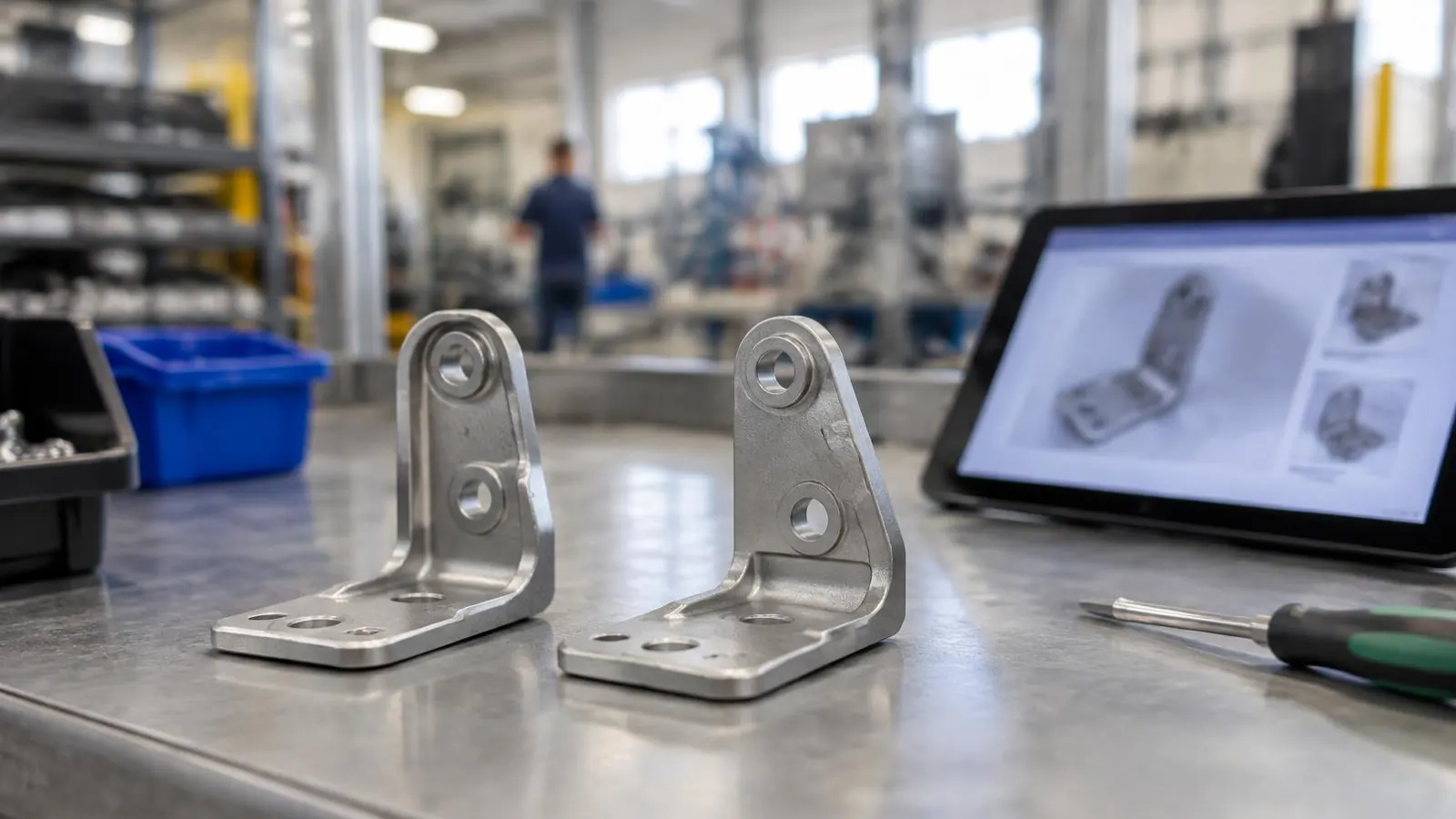
- Variant differences as clearly marked steps, not as a full copy of the instruction. If variant 23 has a different bracket, the instruction says so at the step where it matters — with a photo of the variant-23 bracket next to the standard one.
- Make the difference visible. A step that differs from what the operator usually does should look different: a highlighted frame, a "check variant" marker, a side-by-side picture. Operators skim familiar steps; the unfamiliar one has to stop them.
- Fewer, better instructions. If two variants differ only in a label, they don't need two instructions.
Every time you change a shared step, you change it once, which removes most of the drift.
Delivery: don't make the operator choose
The most reliable way to open the right instruction is to not ask the operator to pick it.
- From the work order. If the line runs on an MES, the order already knows the variant. The instruction for that variant should open with it, on the station screen the operator already uses. Hidria and VHIT both deliver their instructions inside the MES, on the terminals operators already use.
- From the part or the station. Without an MES connection, a QR code on the traveller, the fixture or the station takes the operator straight to the right instruction — not to a folder.
- Only the released version. Whatever the route, it should lead to the current approved revision and nothing else. Old copies on a shared drive are how drift returns.
Rare variants and changeovers
Two moments carry most of the risk in high-mix assembly.
Changeovers. Put the setup in the instruction: fixture, tooling, program, first-piece check. A changeover guide with short video clips of each setup step is also the guide the new setter learns from. At MANN+HUMMEL, standardised video instructions reduced changeover inefficiency by 15%. For more on this, see how to reduce changeover times.
Low-volume runners. Before a rare variant runs, have the crew go through its guide together — ten minutes at the start of the shift, focused on what's different from the usual product. Record who took part, so you know who has seen the current version.
Instructions are not error-proofing
One limit: an instruction tells people what to do, it doesn't stop them doing something else. Where a variant mistake would be expensive or dangerous, a poka-yoke — a fixture that only accepts the right part, a scanner check, an interlock — beats any instruction. Use instructions for everything else, and to explain the poka-yoke so nobody works around it.
Keep the instructions current
High-mix instructions go stale faster than single-product ones, because there are more of them and each one is used less often. Two habits help:
- Let operators flag problems. The operator who notices the photo shows an old part should be able to flag it from the station, straight to the engineer who owns the instruction.
- Review by use. Instructions for variants that haven't run for a year deserve a check before they run again.
A short checklist
- Is there one owner for each product family's instructions?
- Are variant differences marked at the step where they matter, with a picture?
- Does the instruction open from the work order or the station, rather than from a folder?
- Is the changeover in the instruction, not only on a setup sheet?
- Do rare variants get a short refresher before they run?
- Can an operator flag a wrong instruction from the station?
Where REWO fits
REWO guides are built from video, images and short text, so variant differences can be shown rather than described. Guides open by QR code at the station or straight from the MES work order, always on the approved revision, and operators can flag problems back to the engineers who own them. Each person's view and confirmation of a guide before a low-volume runner is recorded like any other training.
Read next: For process engineers · Guides · How to make good assembly line work instructions